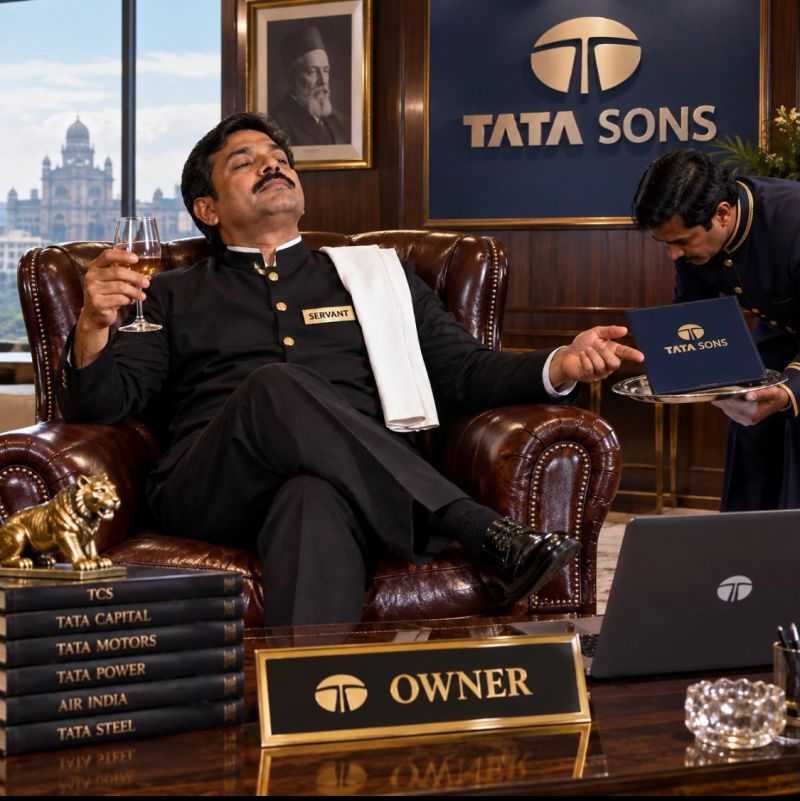
Tata Saga – Part 9
The Harish Manwani question: Is a corporate executive fit to be on the board of a fund. The answer is NO. Exceptions apart. And I don’t think Harish is an exception.
I hardly know Harish. But I have known of him from close quarters. First he is my senior from Bajaj. But that is hardly a positive. MBAs in my opinion are irrelevant to the ai age. His father in law, the highly respected PK Roy Choudhary worked in the Dept of Telecom and has been my guide and mentor decades ago. His sister in law Chandana interned with me for many months and I thought she was a really fine young lady. If I were looking to sell toothpaste or dog food – I think Harish would be a dream hire.
But Tata Sons does not sell toothpaste or dog chews. Or salt.
Tata Sons is a fund – by whatever name called. If I were to look at a Board member (forget independent – there is no such thing !!!!!), my concern would be whether their skills, incentives, independence, and conflicts fit the role. In general a corporate executive would not fit.
Key issues:
1. Different fiduciary perspective
A corporate executive is accustomed to acting for one operating company. A fund independent director may need to oversee multiple portfolio companies and other stakeholders. Consequences that travel !!!!
2. Executive mindset vs oversight mindset
An executive is generally rewarded for making decisions and delivering results. A fund director’s primary role is challenge, oversight and judgment.
3. Limited investment-governance experience
Running a corporation does not necessarily provide experience with fund matters such as valuation policies, related-party transactions, carried interest, investor allocation, capital calls, portfolio-company exits and conflicts between different funds.
4. Information asymmetry
An independent director without investment-management experience can become overly dependent on management rather than genuinely testing its decisions through independent sources of information.
5. Limited Network dependence
A prominent corporate executive may have spent decades inside the same business ecosystem. It is always a village pond frog.
6. Reputation can become a substitute for scrutiny
A famous corporate name on the board can create an impression of strong governance without necessarily providing strong challenge. The Parsis in hdfc are a sad example of community brand prostitution.
For a Category II AIF, for example, I would examine the person’s independence in four dimensions: financial independence, relationship independence, decision-making independence, and investment-governance competence.
I don’t see Harish passing in any of the four.
The Tata Independent Directors from KP Krishnan to Harish Manwani to Sudha Krishnan to …. are freeloaders looking for free money with no accountability other than loyalty to the individual who appointed them.