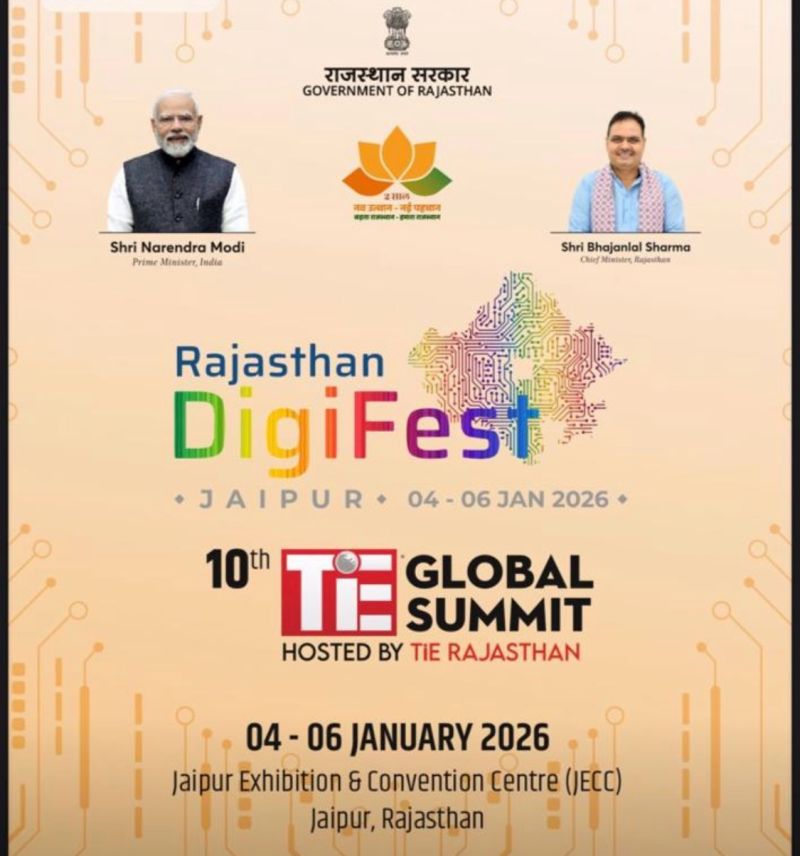
Over eager but well meaning govts
Are we inadvertently following Silicon Glen
In state after state. Refusing to learn.
Like 10,000 others, I am at the Digifest and Global Tie Summit being hosted in Jaipur. Local event super manager Mahavir Sharma who hosts a wide variety of shows from the Gems & Jewellery Show to Carpets to the Tie Summit is leading the event. The local Tie Chapter doesn’t have a single techie from the AI domain.
Will Rajasthan become the AI capital of the world ??? I didn’t find anyone in the audience or on the Dias who seemed to believe it would. So what on earth was everyone doing there ?
These events become a venue for quick shortlisting of ideas and investments. In three days, an astute fund manager will figure out whether the state makes sense or not for AI.
The States strategy has a remarkable similarity with “Silicon Glen” — an attempt to build a UK version of Silicon Valley in Scotland. Why did it fail ?
1. It was manufacturing-led, not innovation-led
Silicon Glen was built around electronics manufacturing and assembly, largely by US and Japanese multinationals (IBM, Motorola, National Semiconductor, DEC, Sun, NEC).
• R&D, product definition, and system architecture stayed in California
• Scotland got plants, not platforms.
Silicon Valley, by contrast, was design- and IP-centric from day one.
2. Absence of risk capital
Without capital that tolerates 8–9 failures for 1 success, ecosystems stagnate.
3. Branch-plant syndrome
Most firms in Silicon Glen were subsidiaries:
• Strategic decisions, layoffs, and closures were made elsewhere.
• Local managers had no mandate to spin out ventures or retain IP.
Once global cycles turned, the ecosystem hollowed out rapidly.
4. Policy focused on jobs, not ecosystems
Government incentives emphasised:
• Employment numbers
• Regional development
• Tax breaks and grants
They did not prioritise:
• Capital formation
• IP retention
• Scale-up support
This is a classic industrial-policy error: optimising for jobs instead of control points.
5. Missed platform shifts
Silicon Glen was strong in:
• Semiconductors
• PCs
• Telecom hardware
It largely missed:
• Internet platforms
• Software-first companies
• Consumer internet and cloud
• Venture-backed deep-tech scaleups
By the time software dominance became clear, the ecosystem was already fragile.
⸻
The deeper lesson
Silicon Glen shows that technology clusters cannot be assembled top-down. They emerge when:
• IP creation is local
• Capital is patient and risk-tolerant
• Failure is culturally acceptable
• Founders, not governments or MNCs, control outcomes
Scotland built factories. Silicon Valley built optionality.
So which way will Rajasthan go. After day one of three – the jury is kind of decided. The state govt is putting up a good fight
By end of day Tuesday, we would know.