No job is ai resilient. Jobs are dead.
But work if you must, join a company
In an AI resilient industry.
Most old industries will be dead. A victim of ai. And this includes new economy industries like telecom, insurance, discoms, tv channels, automotive mfg … maybe even agriculture.
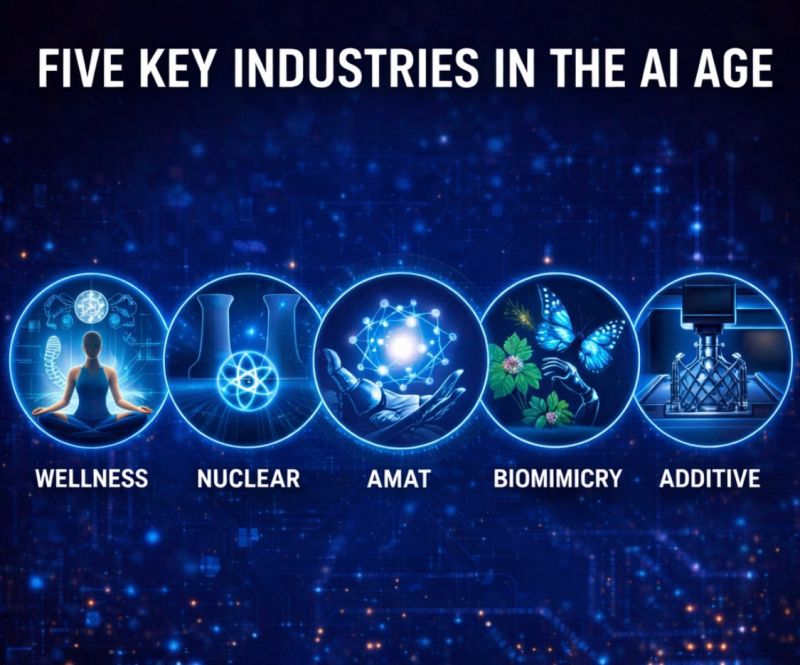
But there are some industries – one really old and four really new that are likely to be ai resilient. Let’s start with ancient wisdom.
Luxury wellness is now the highest value add segment in hospitality. It sits at the intersection of healthcare, hospitality and sustainability. Every activity requires a human touch point which is hard for a robot to replicate. So whether you are a massage therapist in the wellness centre or the programming director for the retreat, your job is not going anywhere. More and more people will be able to afford wellness retreats. And robots will free people’s time so they can do these retreats.
At the same time, traditional professions like carpet weaving or wood carving are dead. It is quite easy for a robot to do these things. Weaving a Carpet for example is elementary as is embroidery.
The second industry is nuclear. HPCL had an ad decades ago, “Fill it, shut it, forget it”. Nuclear is as simple. No fuel refills and no fuel time. Everyone needs a colocated power plant. And nuclear is cheaper than coal, takes less land than solar and is cleaner than hydel.
The third is Amat or advanced materials. Ai can be used to discover and design new materials. However it can’t make it. So someone has to go from computer to a real material. As complexities and innovation increase, this is hardly trivial.
Next is bio mimicry. Most processes is nature happen at room temperature and pressure. You can now make advanced materials using biotechnology. No pressure. No vaccum. Even metal alloys can be made cold.
Fifth is additive manufacturing. No machining so no wastage. This is how you will make and maintain robots. We used to call this 3d printing. But now it goes way beyond. You can even make a house or a protein this way. You don’t need the world war 2 type plants that you see in heavy engineering companies. Aircraft parts are being made by additive techniques.