A class 9 pass car mechanic just demolished the car industry. He repairs luxury cars and customises sports cars. So his benchmarks are not rural or Indian.
I was at the FT Morris rural entrepreneurs startup hackathon. FTMorris is a Venture Studio and startup accelerator focused on the under privileged. It works in the border districts of Jodhpur and has an office which challenges Google – with a Pickle Ball court and 24/7 pet friendly cafe.
Two promoters. One wants to pursue a CA and makes a living as a driver. Second wants to build a NextGen sports car company. And makes a living as a emergency towaway mechanic for luxury cars.
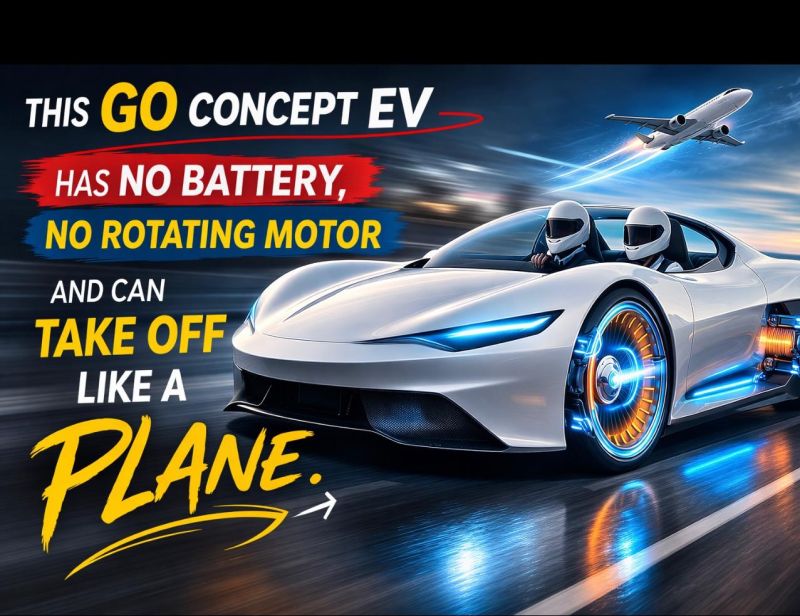
They won the Desert Hackathon. By challenging something fundamental. Why do we need rotating motors in an EV. Worse, why do we need to make the vehicle heavy and expensive with batteries.
UFOs in sci fi movies don’t have wheels. And autonomous cars don’t need drivers. Nor do metro trains in Delhi metro. Their solution is a perfect fit for mass movement or 5 lac people a hour for Kumbh 2028.
Today’s EVs still rely on rotary motors — machines that spin a shaft, which then turns gears, axles and wheels. In other words, even the most advanced EV still carries a drivetrain architecture invented for mechanical engines. It is like a horse cart morphing into a petrol automotive morphing into a ev.
Instead of converting electricity into rotation and then into motion, a linear motor converts electricity directly into straight-line force. Just electromagnetic force pushing the vehicle forward.
This seemingly small change could have enormous consequences.
First, efficiency improves because mechanical losses disappear. Every gear, bearing and shaft introduces friction. Linear motors eliminate many of those components.
Second, vehicle design becomes radically simpler. Future EV platforms could use distributed propulsion systems where multiple linear actuators control motion with extreme precision.
Third, software control becomes far more powerful. When propulsion is purely electromagnetic, acceleration, braking and stability can all be controlled digitally with remarkable precision. And regeneration.
And the most interesting possibility lies beyond the vehicle itself.
Imagine highways embedded with linear motor stators that can pull vehicles forward while supplying power wirelessly. Vehicles would need much smaller batteries, and freight corridors could operate almost like conveyor belts for autonomous trucks.
This is why linear motors already power maglev trains, advanced robotics and high-speed transport systems.
When transportation transitions from mechanical drivetrains to electromagnetic propulsion systems, the entire architecture of mobility can change.
Sometimes the biggest technological revolutions don’t come from thinking out of the box. They come from throwing the box away.
A rural team from Pali district came up not with an idea but with a working repurposed Porsche capable to 280 kph.
TRL 8+
#304
2026