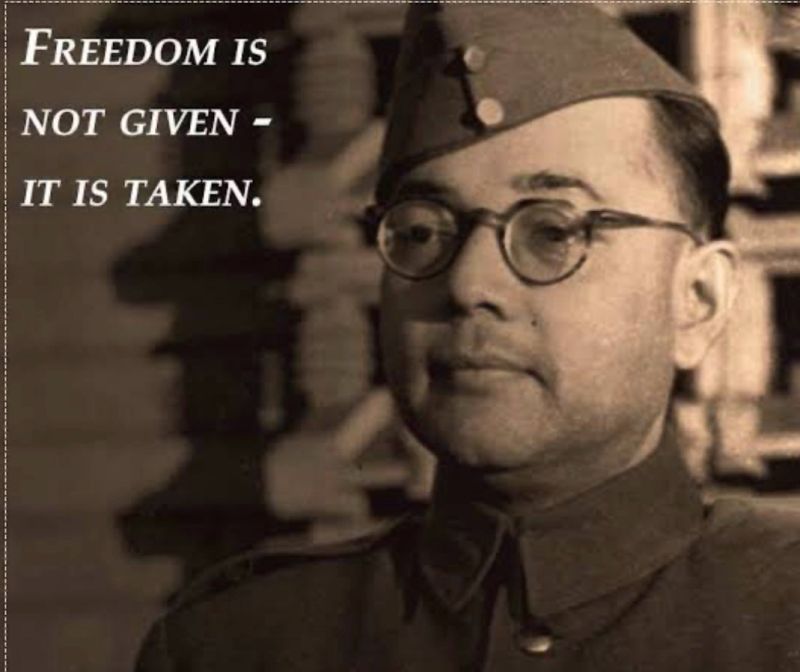
Chapter 4B: “Freedom is not the destination. It is a pre requisite for economic progress of Indians,” was part of the annual report of Laxmi Insurance Company. Laxmi was probably India’s first promoterless joint stock company. The principal investor was neither a board member nor a part of the management. Punjab National Bank funded by the same investor was the second. Inbetween he had toyed with funding New Bank of India with a promoter face as lead. He had also funded a newspaper called New India.
BNs strategy had three main points – make India autonomous and independent, create large institutions in banking finance stocks & insurance (BFSI) and create enough force to act as a deterrent (Lok Bal Pal). He was sure that the British would leave – with or without the so called “quit India” or “civil disobedience”. What he wasn’t sure about was how India would run itself. He was a capitalist. He had send Bipin Pal Chandra to the U.S. to study both “democracy” and “capitalism”. He was sure this was the way to go.
By 1936, he had achieved the first phase of independence with the British govt agreeing to local provincial govts. But he hadn’t got here without a fight. Bal Gangadhar Tilak was dead. Lala Lajpatrai had been killed by the British in 1928. Bipin Chandra Pal had died in 1932. All he had was Subhash Chandra Bose. And he wanted him to be President of the Indian National Congress and then of a Free India. He wanted India to copy the American System of Presidential democracy and capitalism. For him, capitalism had to be built around large promoterless board run professionally managed companies.
But Bombay was growing differently. And growing very fast. The Gujarati brokers had gained control of Bombay Stock Exchange. Tatas and Birlas were creating promoter led companies. How could one promoter lead such diverse companies, he wondered. To succeed, companies required undivided attention. They had to pursue vertical integration and aim for global dominance. He had done it. And he believed, it could be done in every domain.
But the Bombay group thought differently. Even Subhash Chandra Bose had got frustrated with the Bombay group. Bombay had no domestic banks, no domestic educational institutes, no vocational training, no real business leadership. And this was true of Chennai as well. Or of Gujarat. Lahore, Karachi, Punjab, Sindh were different.
He was not thinking independence. He was thinking beyond independence. He was thinking of a smooth transfer of power.
He had famously said, “You can’t piss against the Niagara Falls and hope to make a difference”. Tilak had not taken his advice and spent his best years in jail. The Rupee Bank didn’t go anywhere. Lala Lajpat Rai was killed when the British lathi charged a protest which had gone violent.
Around 1940, BN was convinced that the Congress leaders were in collusion with the Aga Khan. Bose was not just convinced, he was furious.
The British were playing both ends from the middle.