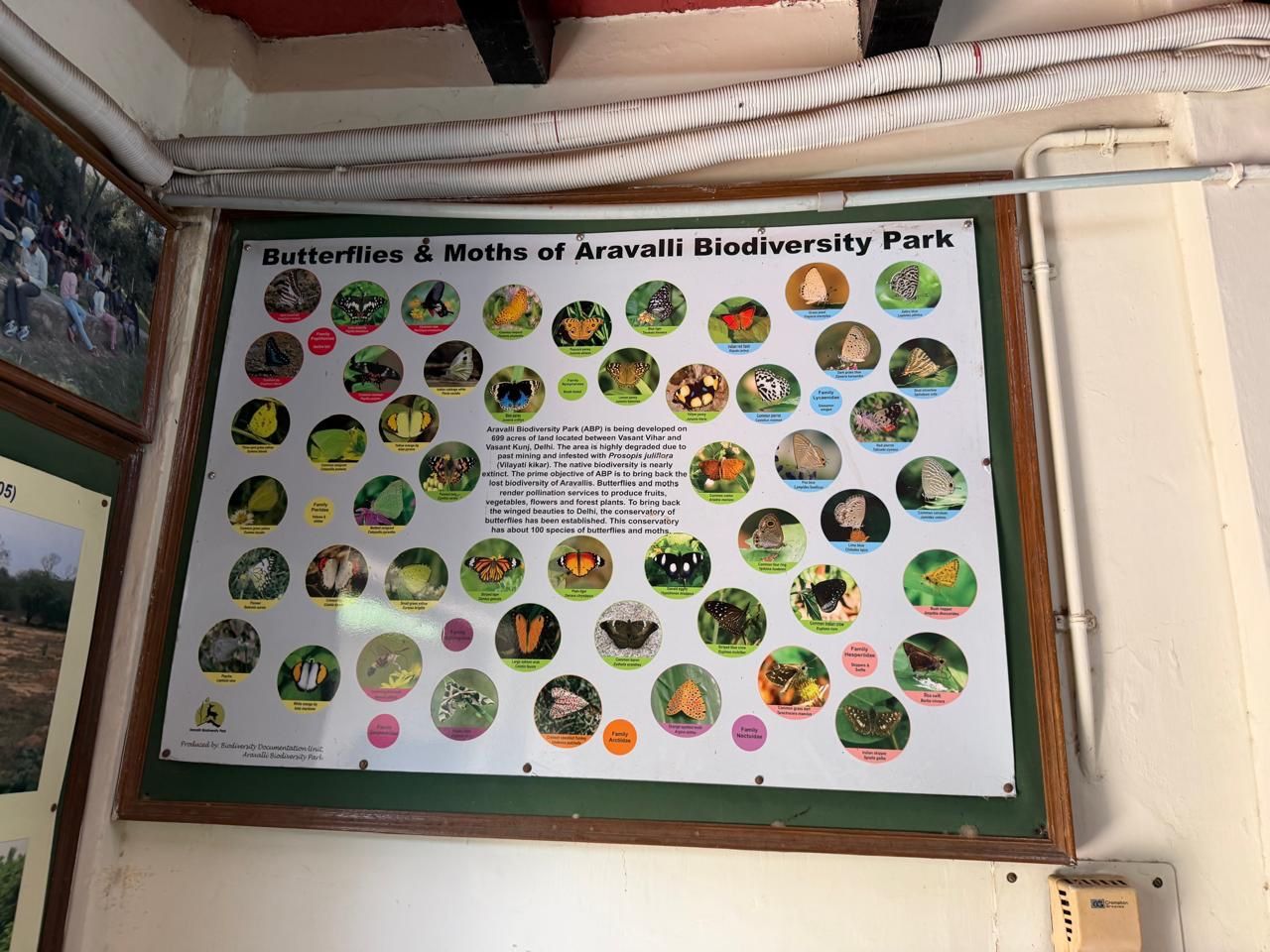
The Aravalli Biodiversity Park, the Yamuna Biodiversity Park and five others in and around New Delhi are a 3000 acre ecological restoration success story like no other anywhere in the world. Carried out over 22 years, the parks are the result of outstanding work done by Prof CR Babu of Delhi University and supported by DDA.
Some of these lands were highly degraded and included mining pits and complete wastelands devoid of any greenery. Some were in the vicinity of crime infested neighbourhoods. Most had little water or biodiversity. Pigeons and crows were the only visible wildlife. The DDA was inclined to convert these into concrete jungles. The three malls in Vasant Kunj, New Delhi were the starting point for the destruction of ecology, till the courts intervened.
In 2019-20, members of the IIT Alumni Council Task Force visited forests not just around the country, but around the world. The Biodiversity parks built by Prof Babu stood out as the best. Not only did they cost very little, they also delivered outstanding results. The core issue was then about replicating this success. And the key question was, “Can we do it better, faster and bigger ?” to which the answer at that point was, “Don’t know”. The only way out was for someone to go out there and do it. So in 2021 as covid was waning, one enthusiastic volunteer Srinivas Rachakonda took a train ticket to nowhere (actually the buffer zone of Bandhavgarh Tiger Reserve) to find a piece of land to buy and to build a biodiversity park in.
The Prof Babu formula was simple. Fence the area to prevent grazing, remove and prevent invasive species like Lantana and then let nature do its magic. Most important was to keep squatters and humans out. It was a simple enough formula. The starting point was a Lantana infested wasteland which became Prakriti Prerna Foundation. Starting in 2022, the magic had been done by end of 2025. There was a highly biodiverse dense forest on the land – with trees as high as 40 feet, a rich array of medicinal plants, a banyan tree with 18 inch leaves, several species growing below the large trees, a three layered forest, a tiger which visited daily, tens of species of birds and animals, a Carbon rich – micro organism filled fertile soil, an improved water table … .
Some videos of the wonder can be seen here:
https://lnkd.in/gUhkHm7B
Most important they kept humans and concrete structures out. Those who stayed on campus lived in mud huts with bamboo roofs, dry toilets, minimum ground water usage, rain water harvesting, ponds to retain rain water and organic farming.
The successful case study now opens the gate for population scale replication of Prof Babus techniques. At the national think tank meet on river rejuvenation, the room full of experts gave him a standing ovation.
Now to execution.