Who owns a Trust ? Who actually owns the Tata Group shares ? More important who controls it ? The same is true of other supposedly Board run companies in India including Axis Bank, HDFC Bank, NSE, L&T … and many others.
The strategic decisions and appointments of Board members are very intriguing. Who makes these decisions and why ? Supposedly the shareholders of companies are making these decisions yet there is hardly ever any competition. One would expect something akin to an election with multiple people claiming a stake to be Directors.
For example State Bank of India has a Director to protect interests of small shareholders. How this Director is appointed is an unsolved mystery for the small shareholder. And the person so appointed is rarely accessible to the small investor. One of the prestigious holders of this position was a full time key employee of Citibank. And another key employee of Citibank forced out by RBI became a member of Tata Trust. Declared unfit and improper by RBI, he was fit to lead Tata Trust. Not to stop at that, he is also an independent Board Member of the hallowed L&T.
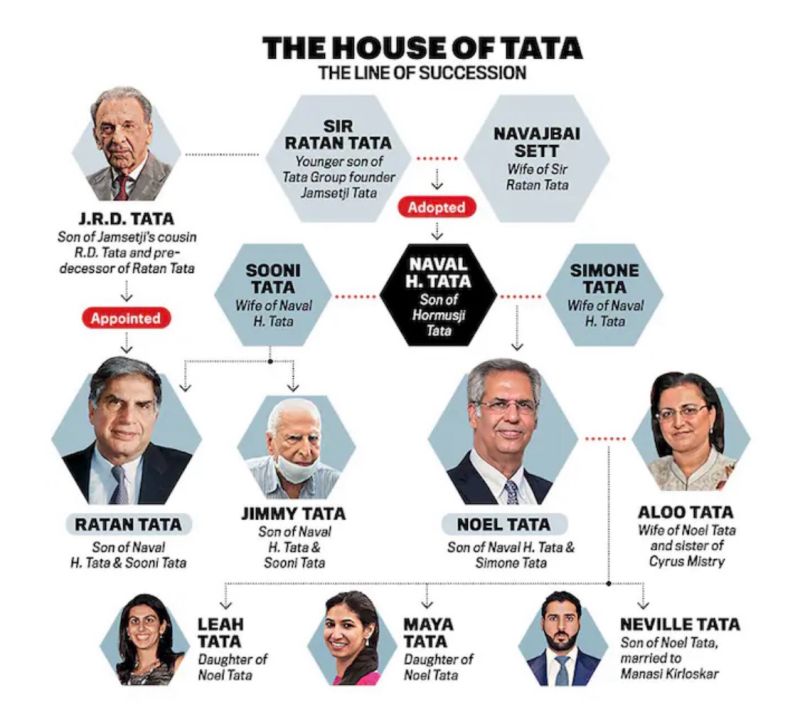
The Tata Trust trustees are even more intriguing. And the ownership and control of the Tatas is completely baffling. How does a family member become the head of Tatas ? There may be little to question in the lineage. But what is not known is how lineage translates into control or appointments.
The Tata Trusts are charitable trusts. They are designed for charity – not to run companies. Or to control them. Investments if any are to create income out of the corpus. Where does controlling companies come into it. The investments are held through a company called Tata Sons which is a private unlisted company.
However Tata Sons by virtue of its size and construct is a systemically important financial institution which may or may not be a holding company. If it is a holding company, then there is just no reason for it to be registered as a AIF under SEBI, as a NBFC under RBI or as a investment company akin to Berkshire Hathaway.
The Tata Trusts trust deed is not made for modern times. Yet it operates under the Indian Trust Act of the 1800s. State governments modify this Act at will. Trust act was designed for temples and places of worship. The Societies act was designed for schools and places of learning.
In fact a Trust cannot even own shares in a company. So they are held by the Trustees. So the shareholder is not the Trust but the trustees. There is a lot more devil in the detail. And few understand this other than Alexander Fletcher Ferguson, the Chief Accountant of the East India company who helped draft most of these documents. I have never understood them myself though I spend many years trying to grapple with them.
The last act is now playing out. And it doesn’t seem to be going to good places.
What on earth are competing businessmen like Venu Srinivasan doing in Tata Trust. It is inherently a place of profit and a conflict.