Great news. Whatever else may be right or wrong with our govt – there is no denying the fact on three fronts. First is that they try – right or wrong, they go ahead and speed implement. Second, they learn from their mistakes and course correct equally rapidly. Third is that when they eventually get it right, they share a blue print in an open source model for others to copy and benefit from.
As the IIT Alumni Social Fund, we are extremely grateful to the government for leading the way and making our choices clear. Seven years ago, we were as clueless about how to make the transition from fossil private to clean public transportation. To be fair, even we thought that electric public buses run by State Transport Corporations was the way to go.
The govt spent Rs 50,000 crores in various schemes. And thanks to that, we now know what does not work.
The electric bus fiasco was on account of three flawed assumptions.
The first incorrect assumption was that bus services were an exclusive monopoly of the state under existing regulations. It is pretty clear that this is not the law. And appropriate Supreme Court judgements say so.
The second incorrect assumption was that the 12m bus was the right form factor. The right form factor is a 1.8m vehicle with flexible seating options that range from a four seater conference room to a eleven seater. The right billing format is per seat per trip just like shared uber. This can be registered as a car and need not be registered as a bus.
The third incorrect assumption was that the large bus format offered the lowest cost per passenger km and the lowest pollution. The total cost for a govt bus on a per passenger km basis is the highest in any category. In fact for the kind of money burnt by DTC or BEST – they can offer free uber or ola transport to as many passengers as carried by the STCs.
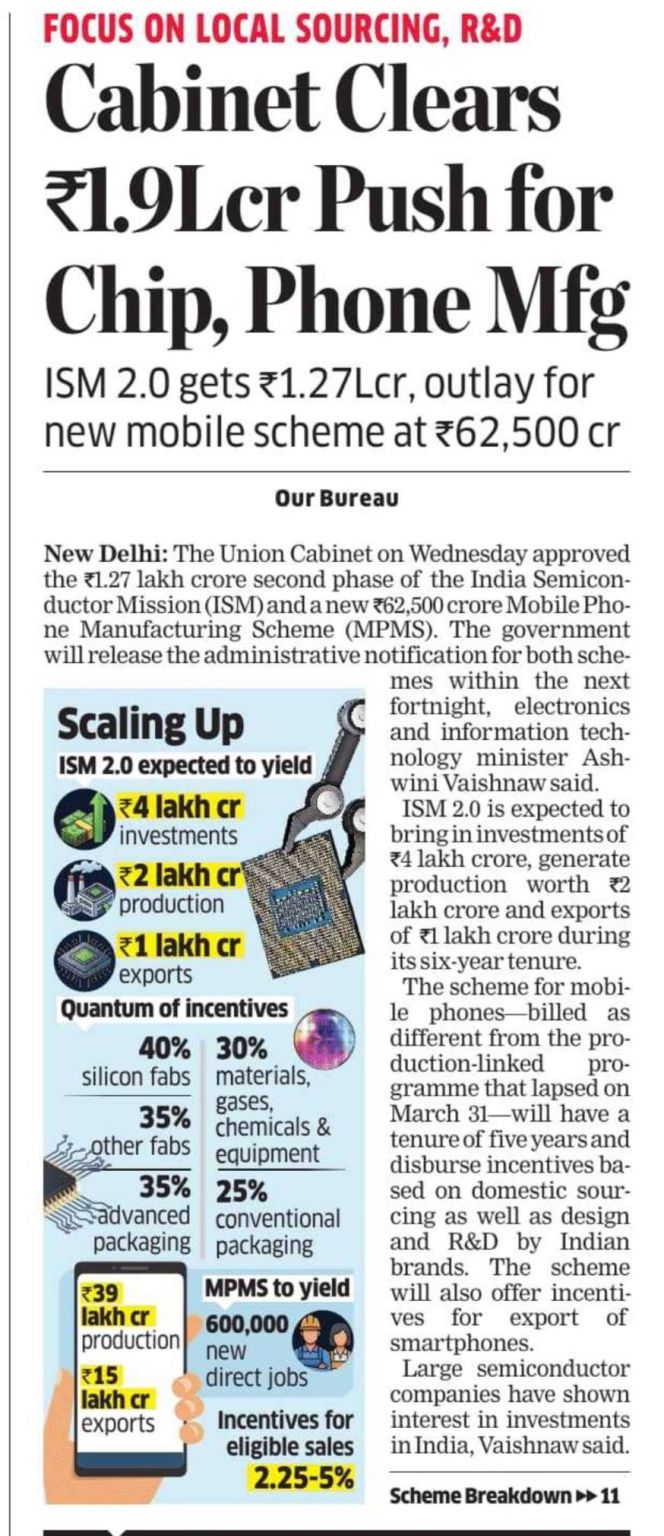
An identical situation is playing out in smartphones. Again three flawed assumptions – the first that doing dumb assembly will lead to backward integration. It does not. It only creates subsidy dependent players with negative foreign exchange earnings on an overall basis. Tata iPhone misadventure being a classic example. High topline is no indicator of profitability, comparative advantage or sustainable operations.
The second assumption was that the contract manufacturers would develop their own designs and IPR. And India would have its own brands. Before the scheme we had five domestic brands. Now we have one. And that seems like a victim of the boat collapse in faraway Vietnam.
The third assumption was that we will develop our own battery technologies, display panel manufacturing and chipsets. Except for one new player in batteries – Go Power – we don’t see any. And even Go Power wants to focus on selling drone batteries to China (surprise surprise!!)
R&D is the right way to go.
Congratulations to the govt.
Just one word of caution. R&D doesn’t bear results or returns overnight.