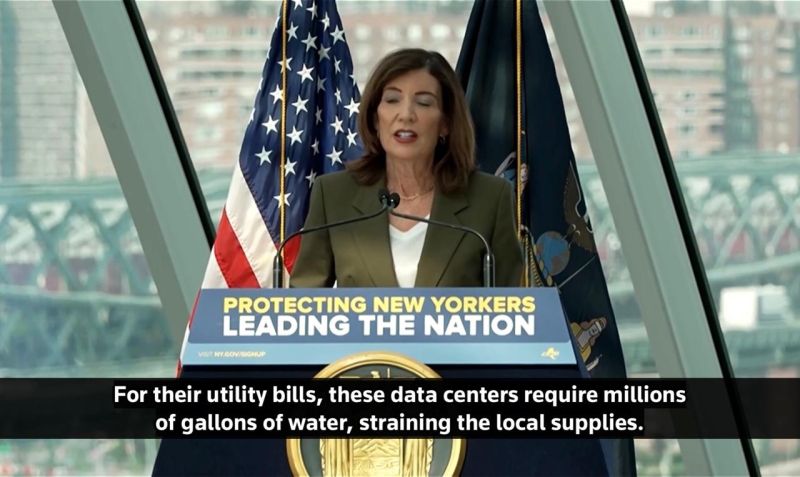
New York has banned data centres over 50 MW. It is reflective of two things – first is that the architecture of both the Internet and data storage is changing. Second that it is not feasible for large urban areas to incorporate the large data centres into their existing infrastructure.
In India we think the limit is 20 MW and not 50 MW. And with good reason. Firstly 20 MW data centres require what is called dry cooling. Similar to your air conditioners at home. They don’t need water for cooling like desert coolers. They don’t deplete or pollute ground water. Second, 20 MW is an ideal size for 24/7 green energy fueled data centres. Third, these data centres are mainly for inference or small language models or for customers using hybrid models which rely on a combination of local hosting and cloud hosting.
But this apart, the real killer is that these 20 MW data centres sit near the customer – on the edge network so to say. As a result you can actually form a network of data centres which collectively can be synchronised to act as one large data centre.
The new data hub coming up in noida is a 2.0 GW data centre. About the same size as what Adani wants to do in Amravati or what TCS thinks they can do. However this is a network of over 100 distributed data centres. Each under 20 MW. The cost of such a data centre in money terms is less than a fourth of that of a mega data centre. The cost per token could be 90% lower. For voice ai, this is the difference between being cheaper than a human being or being three times as expensive.
For the last three years, the conversation around AI has been dominated by chips, models and GPUs. Now the constraint is becoming something far more basic: electricity, water and ecology.
New York has become the first US state to impose a one-year ban on the construction of large new data centres (50 MW and above), citing concerns over rising electricity costs, water consumption and the burden on local communities.
This is a milestone.
The AI race is no longer just about who has the smartest models. It is about who can build the infrastructure society is willing to tolerate.
Every hyperscale data centre now competes with agriculture, households, factories and cities for finite resources. As AI demand explodes, governments will increasingly be forced to balance economic growth against energy security, environmental sustainability and voter concerns. The next AI bottleneck may not be NVIDIA GPUs.
It may be permits. Or grid. Or water rights.
The winners of the next decade may not simply be those with the best algorithms—but those with the most sustainable solutions. As India gets ready to inaugurate its first zero water ai data centre with cop30 airconditioning on the 15th of August – it is not a better five trillion parameter model.
But one that is more affordable, faster to build and more sustainable.
All eyes on 15.8.26 for water free ai data centres and on 02.10.26 for an indigenous Cuda.