Can ai develop consciousness.
And have intuition with super intelligence.
In such a world, what would humans do.
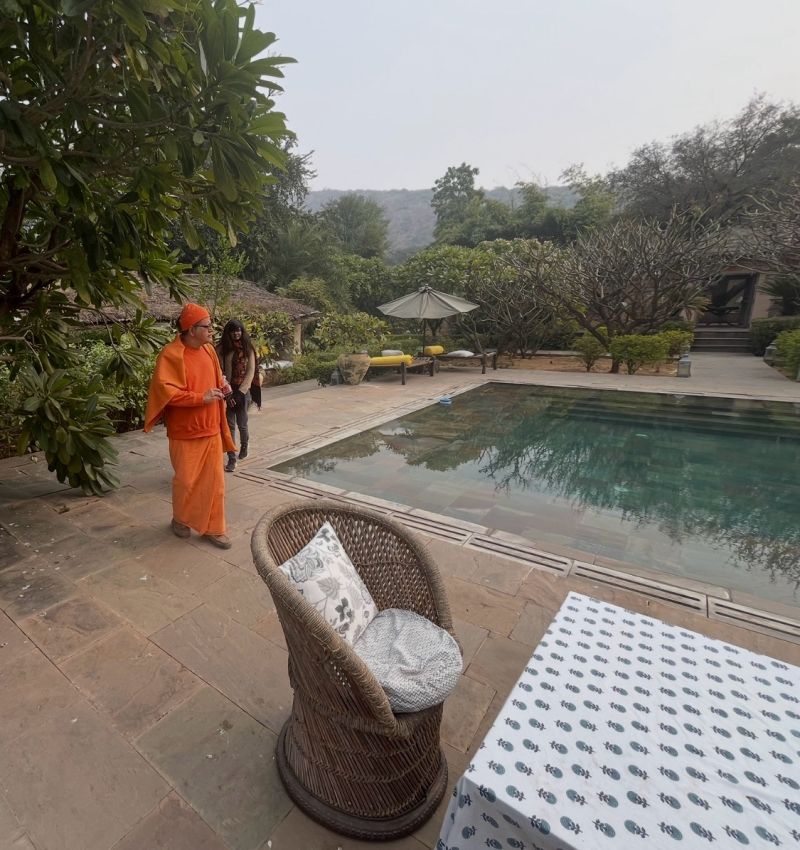
Exactly a year ago, this was the subject of an offsite I attended. The retreat was led by Swami Suryanil 🙏🏻 of the Ramkrishna mission. Swamiji is a PhD in Ai of 1991 vintage with wisdom way beyond his simplicity. He ended the retreat with his signature “nothing matters” but foresaw clouds of war and destruction. In one month Trump became the most powerful leader of the free world. In the one year since, ai has made massive progress. Bubble or not, disrupter it is.
In the book Bullshit Jobs: A Theory, Graeber contended that elites fear a society in which ordinary people enjoy both material security and abundant free time. Such conditions, he believed, would inevitably foster political awareness and social unrest.
He pointed to the United States in the 1960s as a brief historical glimpse of this possibility. During that period, housing, healthcare, and higher education were relatively affordable, labour unions were powerful, and productivity gains translated into genuine economic stability for large sections of the population. With their basic needs less precarious, people acquired something deeply unsettling to those in power: time. They used it to think critically, challenge authority, and organise collectively. Young people, in particular, were freed from constant anxiety about survival, allowing them to imagine alternatives and attempt to reshape society.
As early as 1930, John Maynard Keynes had predicted that rising productivity would reduce the workweek to fifteen hours by the early twenty-first century. Rather than distributing productivity gains in the form of leisure, modern economies absorbed them into the expansion of managerial, bureaucratic, and administrative layers. The outcome was not fewer jobs, but more of them—many existing primarily to justify continued employment.
Instead of liberating people to pursue their own interests, ideas, and forms of creativity, societies witnessed the explosive growth of administrative work.
It is as though jobs were invented simply to ensure that everyone remained busy.
Millions now occupy roles that generate little real value. But may pay well. MBAs epitomised this opportunity.
In a world where technological progress has sharply reduced the need for human labour, work persists as a mechanism of discipline. A population dependent on meaningless employment for survival is easier to govern than one with the freedom to reflect and question.
Surveillance-heavy, low-autonomy jobs become training grounds for obedience, where work functions as a moral credential rather than a meaningful contribution. This helps explain why unemployment is stigmatised even when available jobs are socially useless, why overwork is celebrated despite its harm, and why automation is resisted even when it could dramatically reduce human toil.
Ai changes everything
Does nothing matter