Chapter 5D: as the worlds attention was primarily drawn to the group “Others” which was basically Nehru & Co Pvt Ltd with Gandhi as an external brand ambassador and speaker bureau member – there were not two but three other groups. One was the BN Bose Business Group. Then the I AM GOD organisation front ended by Jinnah and Muslim League.
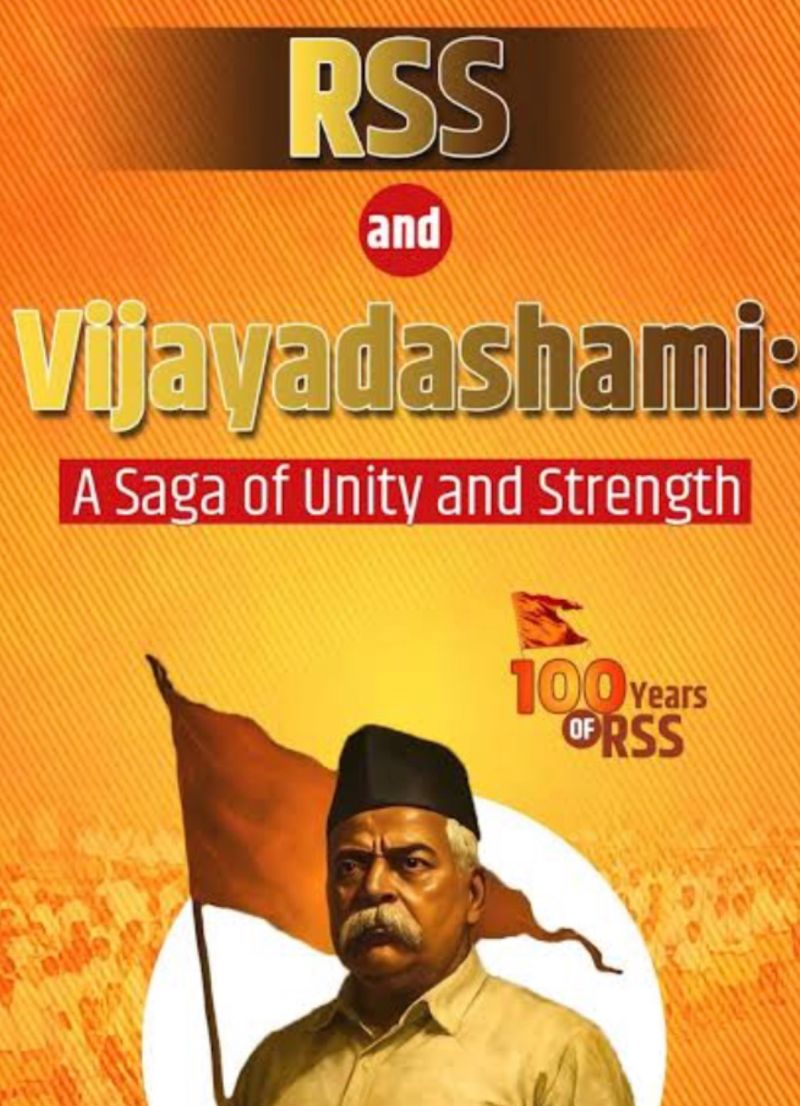
But there was one more. The RSS. It was to rule the country in time and lead India to the doorstep of India’s century. Whether its paradigms are suited to win the century and beyond is to be seen – but it is clearly the right organisation to take India there. It’s political arm was formerly the Jan Sangh and is currently the BJP. But it seems open to supporting others.
Between 1938 and 1947, the final decade before independence, the trajectories of the Indian National Congress, the All-India Muslim League, and the Rashtriya Swayamsevak Sangh diverged sharply—each shaping the endgame in very different ways.
The Congress entered this period as the principal national force but internally divided on strategy and leadership. The 1938–39 phase saw Subhas Chandra Bose rise and then exit after differences with Mahatma Gandhi. With the outbreak of World War II, Congress ministries resigned in 1939, shifting the party back into agitation mode. The defining moment came with the Quit India movement of 1942, when the Congress leadership—including Jawaharlal Nehru—was imprisoned, creating a temporary vacuum at the top even as mass resistance spread across the country.
By 1945–47, Congress returned to negotiations, engaging with British plans for transfer of power while still holding to the idea of a united India, even as that position came under increasing strain. Who made this change happen ? What was the deal?? Who benefitted from the resignation ?
Over the same period, the Muslim League under Muhammad Ali Jinnah transformed from a relatively limited political body into a decisive negotiating force. The resignation of Congress ministries in 1939 gave the League political space, which it used to consolidate support. The Lahore Resolution marked a strategic shift toward the demand for separate nationhood.
The RSS did not participate directly in the major political negotiations or mass civil disobedience movements of the decade. Instead, it focused on expanding its grassroots network, emphasizing discipline, organization, and a shared cultural identity among Hindus. As communal tensions intensified in the 1940s, particularly in the lead-up to Partition, the RSS’s role transformed to punishing the guilty.
RSS was blamed for the murder of Gandhi iand banned. And banned again during the emergency. The Muslim league entities were never banned.
Ramkrishna Dalmia was destroyed by Nehru. BN ducked out of public view.
Their acts of sedition were never exposed. Till Mrinal Pandey was booked for sedition recently !!! It is a drama yet to unfold. A story that has never been told.
#428
2026