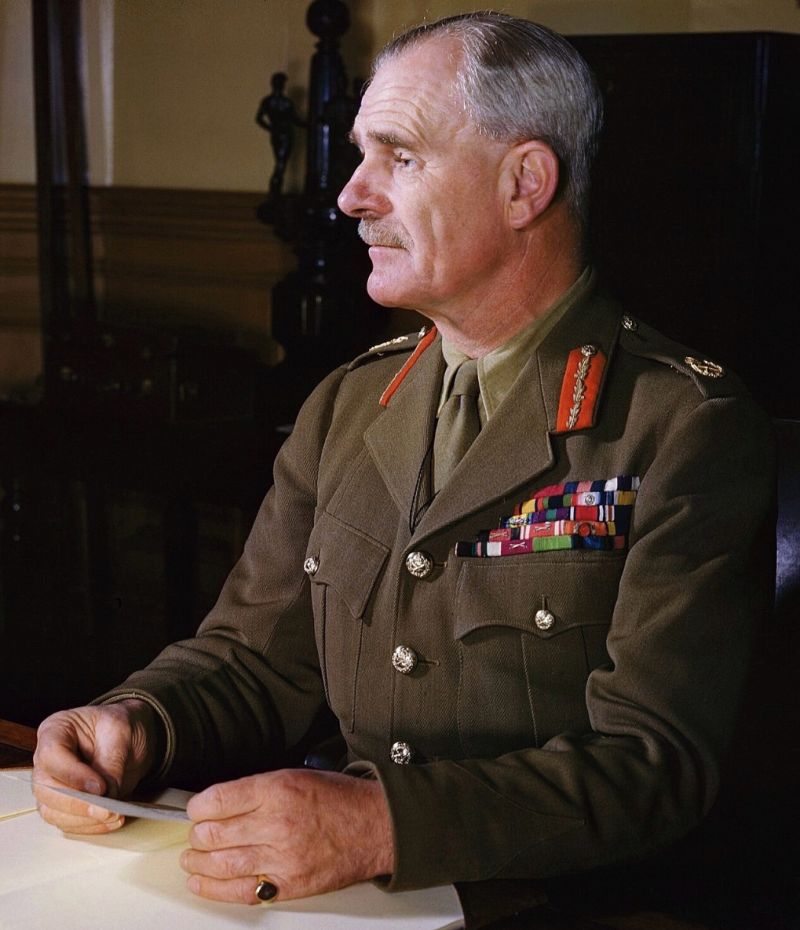
Chapter 5E: Lord Wavell was Commander in Chief of the British Army in India from 1941-43. He was an honest officer who was trying to build a supply chain for war supplies. His largest vendor was BN who supplied tents, uniforms, food and even explosives. He was in the middle of negotiations to recruit a 100,000 professional soldiers through BN. BN already had 20,000 on his rolls and was actively recruiting.
One of the groups he was trying to recruit were Greeks who had stayed back from the times of Alexander the Great. These Himalayan men could easily pass off as Europeans and could infiltrate the other side. There was enough confusion on all battlefronts with contingents often attacking their own allies. BN supplied both sides of the battlefront and getting enemy uniforms was easy. No one really knew anyone and no one knew what they were fighting for. But they were all fighting.
In between a special police force was formed and Lord Wavell and BN were investigated for corruption. Lord Wavel was appointed Viceroy in 1943 but the soldier contract fell between the cracks. These were the 20,000 professional Punjabi soldiers who formed the Indian National Army of Subhash Chandra Bose. The rest were Tamilians from India led by Comrade Lakshmi Swaminathan (who was Lakshmi Rao before and Lakshmi Saigal subsequently).
INA was so busy that she could not make it to her sisters wedding in 1943. Her sister married a Swetambra Jain who wanted to build intercontinental rockets and put hyperspectral cameras on space. BN joked at the wedding, “the Jain’s mock me for eating meat but themselves want to kill men”. The groom was studying under an eminent scientist called CV Raman.
The groom was Vikram Sarabhai.
Who went on to create ISRO.
Between 1943 and 1947, Archibald Wavell stood at the center of one of the most turbulent transitions in modern history. When Winston Churchill appointed him Viceroy in 1943, the Quit India Movement had crippled political dialogue, and the devastating Bengal Famine of 1943 was unfolding. Wavell’s early tenure was less about politics and more about survival—stabilizing food supply, restoring administrative control, and navigating wartime pressures.
But Wavell was not merely a caretaker. He was a well wisher of India. He wanted the Indians to run their own country. And be united. His presence made BN over confident that India would never be divided. He trusted the man implicitly. His proposal—often called the “Wavell Plan”—sought to create an interim government for a united India with participation from all.
He agreed that Subhash Chandra Bose was the right candidate to be President of India and it was for the Indians to choose the model that they deemed right. The British one or the American one. There were clear instructions that Subhash Bose was not to be hurt. Whether he was with the British or against them is a truth we will never know.
And the only end of the war was now in sight.
#429
2026