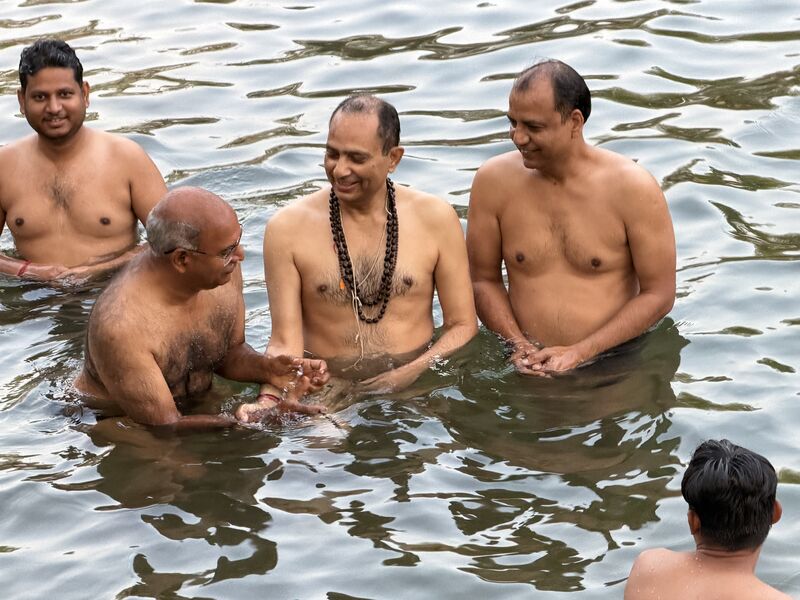
The most efficient way to bathe is in a flowing river. Without soap. Or oil. It consumes less than 100 mL of water. The water remains clean if there is no urination or defacation.
But that is not what happens at the Kumbh or in Haridwar. Fecal matter levels go very high. Soap pollutes. Detergents destroy the river water quality. And all of this can be prevented if we have toilets on the ghats with water re use and treatment.
Thanks to new technologies this is now entirely possible. The DRDO has recently licensed a state of the art bio digester that can treat black water quickly. Three stage systems for grey water have over ten million units now deployed globally. Graphene filtration systems can make the recovered water fit for discharge in the river (or for drinking). Electrostatic systems can soften water without chemicals.
But all these technologies need to be made cost effective for widespread use. This requires widespread deployment and regulatory change. The start point is development and optimisation of appropriate technologies. And that is what non profits like the Deendayal Research Institute and the IIT Alumni Council are working on.
The search now is for startups, companies, research establishments, csr contributors and equipment manufacturers who can help in this task. The immediate plan is to build technology demonstration units for testing and debugging in the NCR area.
Those wanting to contribute are welcome to join the movement. This is not a business proposition but an opportunity to contribute.
The first set of pilots will comprise of fresh water showers with herbal soaps. Waste from these will be used in the urinals. Urine concentrate will be removed for ammonia extraction /fertiliser use – whereas the clear water separated out will be used in the WC. The black water from here will be sent for bio treatment and biogas generation using ai systems.