The Tata Saga – Part 10
THE BOARDROOM THAT REMOVED CYRUS MISTRY
24 October 2016.
One of the most consequential board meetings in Indian corporate history lasted roughly an hour. Cyrus Mistry walked into the Tata Sons boardroom as Chairman. He walked out without the Chair.
But the real story is not only about Mistry.
It is about the directors.
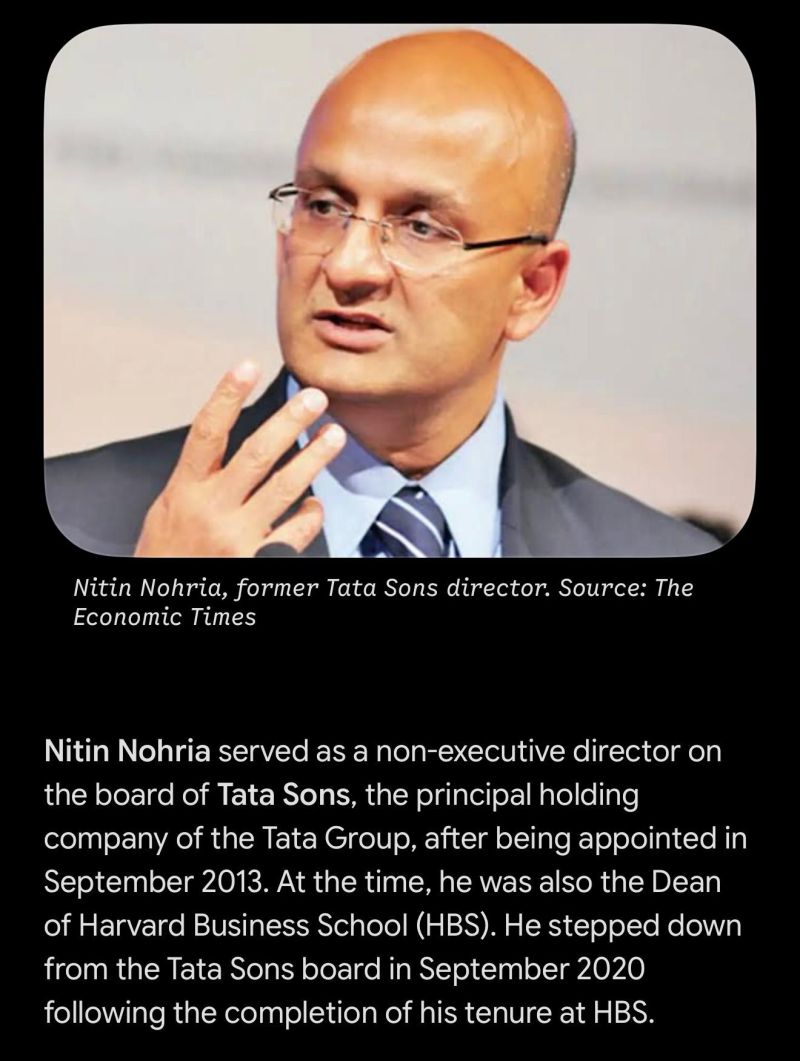
The board consisted of Cyrus Mistry, Ratan Tata, Ishaat Hussain, Vijay Singh, Nitin Nohria, Ronen Sen, Farida Khambata, Venu Srinivasan, Ajay Piramal and Amit Chandra.
The motion to remove Mistry was brought at the meeting. By Nitin Nohria.
According to the recorded proceedings, the Tata Trust nominees — Vijay Singh, Nitin Nohria and Amit Chandra — supported the move.
The independent directors Ronen Sen, Venu Srinivasan and Ajay Piramal also voted in favour.
Ishaat Hussain and Farida Khambata abstained.
Mistry opposed the resolution.
The motion therefore passed 6–0, with 2 abstentions, excluding Mistry from the vote. (Moneycontrol)
There is another extraordinary detail.
The NCLAT record noted that Vijay Singh and Ranendra Sen had participated in the Nomination and Remuneration Committee’s assessment of Mistry only months earlier. The tribunal recorded that the committee had praised Mistry’s performance in June 2016. (Indian Kanoon)
The October meeting therefore raises a fundamental governance question:
What changed between June and October?
The Tata Trusts’ position was that they had lost confidence in Mistry. The Tata Sons board subsequently stated that it had also lost confidence in his leadership. (SEC)
Mistry’s side challenged the process, including the lack of prior notice and the manner in which the resolution was introduced.
The NCLAT subsequently declared the removal proceedings illegal.
But in March 2021, the Supreme Court overturned the NCLAT’s relief and ruled in favour of Tata Sons on the principal litigation. (Indian Kanoon)
That distinction matters.
The Supreme Court’s final judgment does not erase the historical question of how the board exercised its fiduciary responsibility on 24 October 2016.
A board is not merely a voting machine.
An independent director is not merely a number.
A Trust nominee is not merely a shareholder representative.
And a chairman cannot be removed without history, process and accountability becoming part of the corporate record.
**Eight directors voted or abstained.
One chairman was removed.
And Indian corporate governance acquired a case study that remains relevant today.**
Almost a decade later, Tata Sons is again confronting fundamental questions about the relationship between the Board, Tata Trusts, shareholder rights and the Chairman.
Perhaps the most important lesson from 2016 is therefore not about Cyrus Mistry.
It is this:
When the history of a great institution is written, the minutes of the boardroom matter as much as the reputation of the institution.