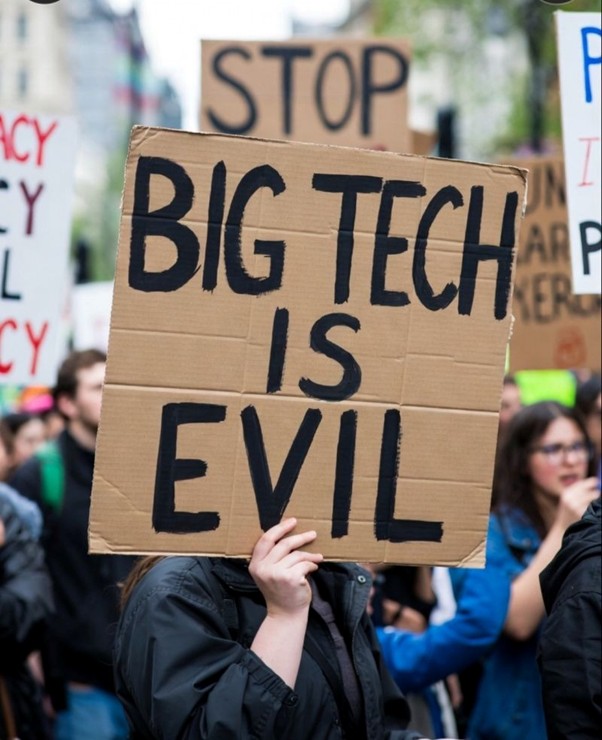
Mega cos are bad news
Efforts like BharatGen are critical Innovation must access capital
Google’s original tagline was:“Don’t be evil”. Bharat Gen can deliver everything that Google can and do it almost overnight. PROVIDED it can access similar capital.
Today, the largest companies no longer move with the market.
They are the market.
And this happened not because of innovation , but because of a structural shift.
Millions of workers contribute to their retirement accounts. Those contributions flow automatically into index funds. And those index funds must buy the biggest companies in the index in the exact proportion the index says. No discretion. No judgment. No valuation concerns.
Traditional markets respond to fundamentals. Earnings. Growth. Margins. Risk. That’s how price discovery worked for a century. Now nothing matters if a stock is on the index. Valuation drives business instead of the other way round.
It becomes like bank Fd rates. They are decided by redemption pressures. So bad bank SBI will increase rates to get money to pay off old FDs. The loans are all a write off. Now here the share price reflects the PF or SIP money flowing into the system.
When a company receives endless inflows, it stops behaving like a business and acts like a monetary sink. Focus is to absorb capital, not make it go far.
This creates a reinforcing cycle. Their weight increases. Index funds are forced to buy more. Their weight grows again. This continues until these companies become so dominant that they effectively steer the financial future of the country.
If L&T or Reliance or HDFC misses earnings, the market shakes. The poor man feels poorer. The country has to control the composition of these Boards.
The markets have lost their power.
We face three systemic risks.
First, diversification is an illusion. See what happened with Indigo. Or telecom.
Second, volatility becomes asymmetric. Anything that disrupts the top companies, directly impacts national wealth.
Third, the system becomes fragile. All public money goes to a few.
Innovative companies receive almost none of the new inflows. This starves innovation. It slows job creation. When an entire nation’s long-term financial health sits on the shoulders of a few firms, risk becomes invisible until it becomes catastrophic.
Bubbles don’t taper. They burst.
Understanding this system isn’t fear mongering. It’s strategic. Most investors are trapped inside a structure they don’t understand.
If the entire market is priced around the giants at the top, everything outside of them becomes undervalued. Innovation doesn’t have an index behind it. Not yet. Sebi is being foolish by preventing young innovative cos from listing.
The danger isn’t that these mega companies are strong. It’s that the system forces them to be stronger than everything else combined.
Will SEBI take responsibility for these cos.
SEBI has to facilitate access to capital for innovation. Else it is anti national.