GO India Research findings
Electric buses are not suited
For intra city transportation
The GO India Public Transport Task Force recently concluded a 24 month study which studied public transportation in 40 cities, visited over a hundred districts, engaged with 12 state governments and involved over 100,000 man hours of consulting time. The study was done by the advisory arm of the IIT Alumni Council (forum.iitcouncil.org)
The key objective of the study was to recommend a cheaper, greener, convenient and reliable public transport ecosystem which could help population scale migration from private transportation to public transport.
The overall findings were not on expected lines and the subsequent analysis seems to suggest an immediate rethink of public transport in light of massive strides made by ai (please see my earlier post on transport ai)
In summary
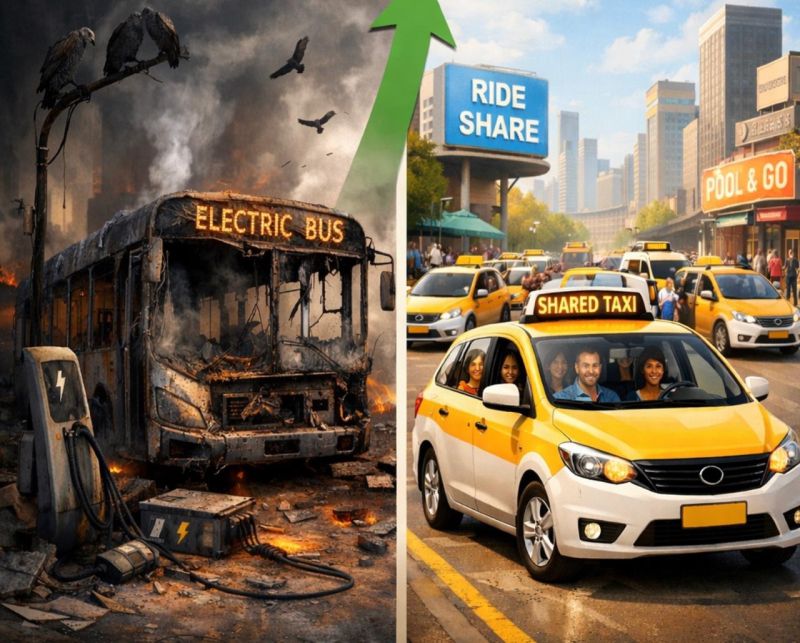
Electric buses are the new white elephants. Electric shared taxis are far more suited for networks with the potential to substitute and replace private transport. They also have a clear technology and regulatory roadmap to autonomous unmanned operations for all – road, water and air transport.
Public transport in Delhi or Mumbai didn’t fail because they lacked electric buses. They failed because they misunderstood how people move. A half-empty electric bus is not green. An electric bus offers the same functionality as a cng bus but at three times the cost.
The all electric bus format with a large expensive battery and subsidy greater than the cost of a hybrid bus is wrong. Till hydrogen becomes feasible, for now the architecture is a smaller vehicle with a quick fuelling system, a low running and a long vehicle life.
Electric buses have been a Rs 50,000 crore failed experiment. Yet they achieved a lot more than they lost. Electric buses helped focus the spotlight on the state transport corporations and helped conclude that going forward they do not serve any useful purpose (more in a separate post). They burn taxpayer capital, run fixed routes in dynamic cities, are optimised for tenders, not commuters and may not be safe.
Shared taxis on the other hand move only when demand exists, pool passengers in real time, scale without subsidies and can be optimised for arrival time, not ideology
People don’t want “public transport”.
They want door-to-door certainty.
In comfort and with reliability
I don’t want to miss and exam if the bus is late.
Electric buses are 20th-century state thinking. Shared taxis are 21st-century internet systems.
Planned mobility loses.
Emergent mobility wins.
Every time.
⸻
For policy makers, the route forward is now clear. Delhi has shown the way under the leadership of the present Chief Minister. Old cars should not be replaced by new fossil fuel cars. Private electric cars should be allowed to act as taxis when free. Shared taxis should be permitted. Profiteering apps should be handcuffed. A new type of navigation map service has to be created.