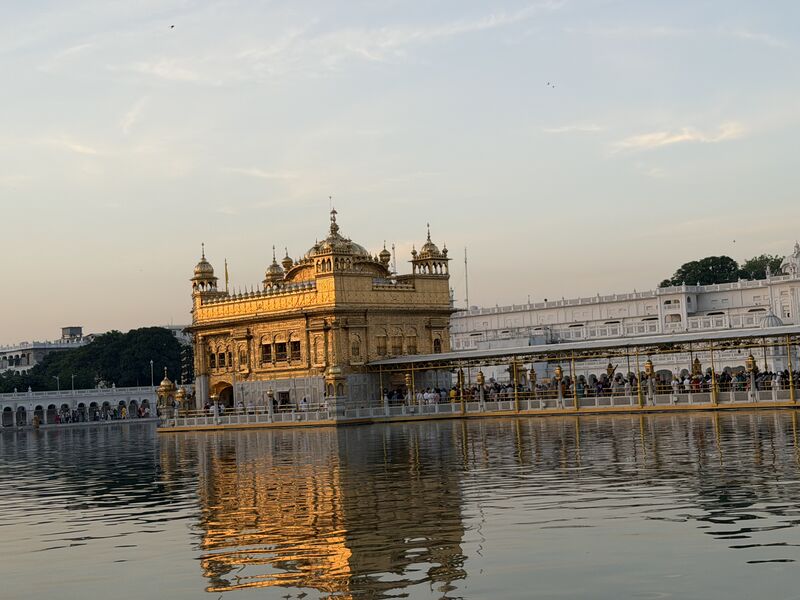
Amritsar is the city on the cusp of change. Not only can it beat Mahakal/Ujjain in terms of spiritual tourism revenue – it can also compete with the metro cities to emerge as a major startup hub – and with Jaipur as a major wedding destination.
With 10,000 five star rooms under construction and ten operational five star hotels – Amritsar will soon have more five star hotel rooms than mumbai city. And larger wedding venues than Jaipur.
Inspite of a virtually non-existent government, an immediate border with Pakistan and drug menace of unforgivable magnitude, Amritsar is on the verge of take off. And to understand why – one needs to take a trip to the Partition Museum near the Golden Temple.
The Partition of 1947 created the most resilient entrepreneurial community in the world – the refugees from Pakistan. Victims of a war that never happened. And a country split that did.
The Partition of India in 1947 led to the largest mass migration in human history. Up to 18 million fled their homes. Over 1 million died. Amritsar has the world’s first Partition Museum to remember the victims and the survivors. It caters to the emotion of over 10 million business families who employ over 150 million people – more than the total govt employment. It is the single largest community of hands-on manufacturing entrepreneurs, has the lowest dependence on public funds and is among the most globalised. They dominate the armed forces, rule over Bollywood and live life king size. Punjab is now their home town. And Amritsar is where god lives for Sindhis, Sikhs and most refugees. A suburb of Lahore, it is now a city on its own right. All set to get ahead of Lahore.
The Museum galleries describe the chaos of early 1947 when riots engulfed much of India, Partition was declared, and the borders were drawn in an ad-hoc manner within a mere 5 weeks. The galleries show the tragic impact of these decisions as people’s lives were torn asunder, as they fled their homes without food or shelter in the largest mass migration in history, arriving at refugee camps across the two nations. There was nothing called Pakistan in history. It was a term coined in the 1930s as a short form for Punjab, Afganistan, Kashmir and Baluchistan
What the museum does not do justice to is the five families who had businesses on both sides of the border. And used all they had to help. These were the Nanda’s, Oberoi, Mahindras, Basheshar Nath and the Guptas. All were born in Pakistan and seamlessly migrated their businesses to India.
These are the five families who defined the new Punjab and its new ethos. These are stories that you won’t find on Google. Or in the Partition Museum. They tell a story of deceipt, of hope and of resilience like no other.
Stories that have never been told.
Waiting to be revealed.
In a set of five posts to be revealed as soon as I get their consent.
It will stir up a hornets nest.