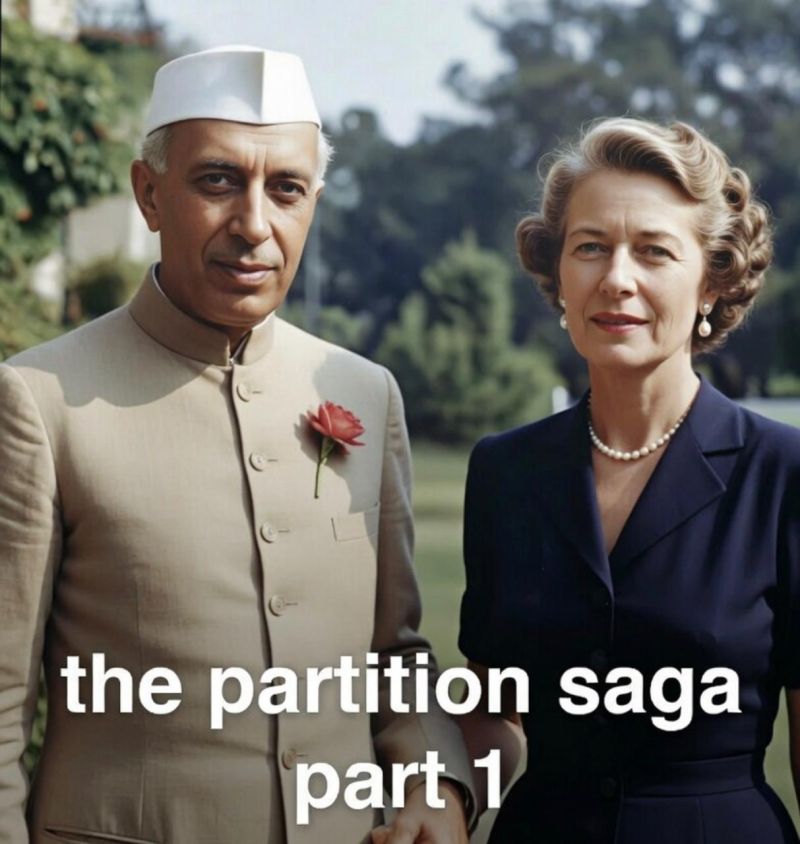
The Partition Museum in Amritsar and its second phase in New Delhi have got prominent refugees together like never before. It has churned the pot, drawing secrets deeply buried in family books and engaged youngsters who see no reason to keep secrets.
The story of the partition of India is one of the most misrepresented truths of history. The explanations given for the British to leave India are plausible but incorrect. The role of the banker cartels is under stated.
The very concept of Pakistan has not been understood. And the role of the key businessmen who made things move in the direction that they did is unreported – as if it didn’t happen at all. Subhash Chandra Bose’s funding and death continues to be a mystery. And the role of the Bombay Club!!!
Let us start with the three key actors – two lawyers and a housewife. Advocate Jinnah from Bombay, Barrister Nehru from Allahabad and Lady Mountbatten from Raisina Hill. There were a few side shows – Sardar Patel, Ambedkar and Gandhi – but they didn’t really matter. And then there were the princely states who did matter, but not to the British.
But let’s start with the basics. Jinnah was not a Suni or Shia Muslim. In fact he was not even an authentic Muslim. His father was a Gujrati who had got into the fish trade. Facing ostracism from the Gujrati community that Mr Thakkar came from – he took to the relatively modern Aga Khani faith called the Khojas. There are four sects among Muslims- Suni, Shia, Aga Khani and Boris. The Aga Khanis and the Boris have a living god – the other two don’t. The Syedna lives in Mumbai. The Aga Khan lived in Europe. Almost no one knows that Jinnah was married to a Parsi, born to a Gujrati Hindu and had adopted the Khoja faith. He lived and worked in Mumbai.
Nehru lived and worked in Allahabad. His family had escaped from mutiny seeking Delhi to a pro British Allahabad. This was the city where Chadra Sekhar Azad was hung. And the Oxford of the East produced loyal civil servants by the dozens. It was a British stronghold like no other. And the Indians, “most loyal to the British” lived here.
And then there were the businessmen – opium traders, tent makers, stock market operators. They thrived in Lahore and Karachi. Bombay and Calcutta were catching up. Jinnah was married to the daughter of the largest of the opium traders – the Petit family. His sister in law Sylla Petit was part of the Tata family. Jinnah was an insider in Bombay. Nehru was not.
And there were five business families in the north. Who could rival the Parsi Baronets of Mumbai. These were families involved in supplies for war. The largest of them was Basheshar Nath. India’s highest individual tax payer. Very little is known about him. Except that he got Dalai Lama to India and hid him in his hill house.
History conveniently misses the fact that he didn’t own the house. He owned Mcleodganj. Here is a trailer: