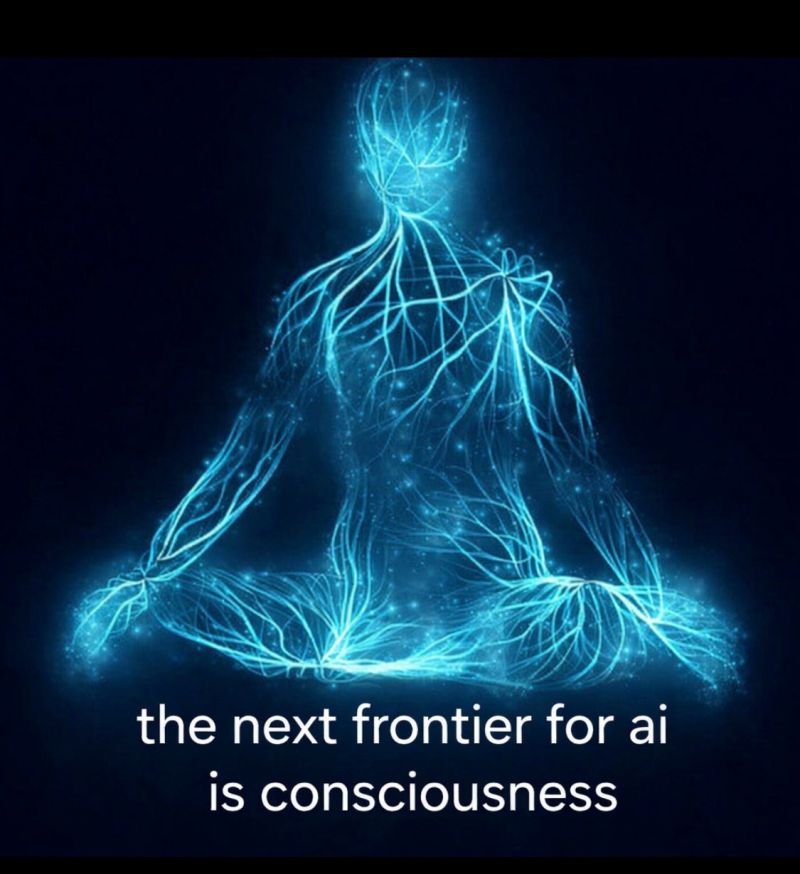
India can lead in the next frontier for ai – consciousness. Buddhism shows the way. Since times immemorial, Indian saints have left their bodies – with a transient state – inbetween life and death. This can last for days or even months.
Tibetan monasteries which use this Buddhist technique that came from India call this thukdam. A lot of the outstanding success achieved by the Sow Rigpa system of complementary medicine, in the area of mental health – and treating chronic depression in particular – come from an understanding of consciousness. Siddha and Sow Rigpa are the “s” in Ayush. The IIT Alumni initiative is extrapolating from the work of Dr Shantaram Kane and Dr Jayesh Bellare which won the only “Lifetime Achievement Award” of the Ministry of Ayush. Their work centred around understanding how complementary systems of medicine like homeopathy, sow rigpa and ayurveda work. These are covered in the book “Ayurveda Revisited” by Shantaram Kane and Christina W. Watson which is available on Amazon under the IIT Alumni Council book series published by Beeja House
In this state, highly advanced meditators die — yet their bodies do not immediately decompose. Skin remains intact, limbs stay flexible, and there is no odor of decay for days or even weeks, despite normal room conditions and no preservation techniques.
Modern biology says decomposition should begin within minutes after death. Cells rupture, bacteria spread, and the body begins a predictable chemical breakdown. It’s so reliable that forensic science uses it to estimate time of death.
Yet thukdam appears to defy that process.
Researchers from institutions such as University of California San Diego and Mind & Life Institute have begun studying these cases more closely. Some findings show unusual brain activity in long-term meditators near death, including high-frequency gamma waves associated with deep awareness.
One of the most famous subjects, Matthieu Ricard, produced gamma oscillations during meditation so strong that neuroscientists initially thought their instruments were malfunctioning.
Decades of meditation appear to physically reshape the brain, quieting the default mode network — the system responsible for the constant internal narrative most of us experience as “thinking.”
But thukdam raises an even deeper question.
Either our understanding of biological death is incomplete, or our understanding of consciousness is.
For centuries, Tibetan contemplative traditions argued that the brain does not produce consciousness — it receives it.
If even a fraction of that idea turns out to be correct, the biggest frontier in science — and perhaps in AI — will not be computation.
It will be consciousness.