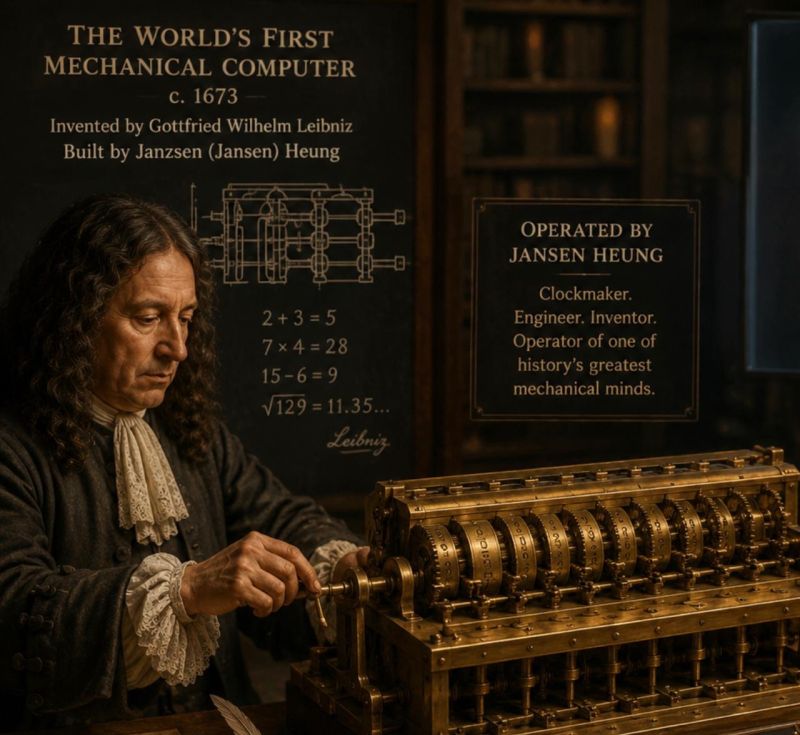
To get to matching the human brain, we need about a million times of the progress made between the 1673 mechanical computer and what is the Nvidia driven neocloud in 2026. And given the most optimistic of projections, getting 1000,000x at 10x per year is still quite a few years away.
The human brain is not just a faster computer. It is a fundamentally different kind of system. When a cat grows up, it doesn’t become a tiger. So you need to start with a baby tiger and not a half grown up pet domesticated cat who eats rats.
AI can already beat humans at chess, coding, image generation, and pattern recognition. That is all anecdotal. The brain has innate knowledge that comes from its dna as a start.
A cat doesn’t have to attend Ivy League college to figure out what is a rat. And how to catch one. And how to eat it.
The average brain contains roughly 86 billion neurons and around 100 trillion synaptic connections. Yet it runs on about 20 watts of power — less than a dim desk lamp. Nvidia talks of consuming giga watts of power to run a data centre which can’t beat a cat in native intelligence, leave aside a human.
Modern AI systems require giant data centers, industrial cooling systems, rivers of water, and megawatts of electricity just to train frontier models. And then after billions of dollars are spend on training – the model hallucinates. and you have no clue whether what it says is right or wrong or hallucination. So people compare findings of multiple ai models assuming that two models will not hallucinate to the same content. Yet ai is plausibly riggable. And it is already possible to hire a professional rigger to rig it.
That contrast matters.
Because the brain is not only computationally powerful — it is:
• Self-organizing
• Self-healing
• Energy-efficient
• Continuously learning
• Thermally regulated
• Fault tolerant
• Capable of abstraction, emotion, intuition, morality, and consciousness simultaneously
A supercomputer crashes if cooling fails for minutes. The brain survives decades of noise, damage, uncertainty, and incomplete information while rebuilding itself in real time.
And perhaps the most important difference:
AI processes information.
Humans generate meaning.
The human brain is the product of nearly 500 million years of evolutionary optimization. Modern AI is barely a few decades old.
That is why the future of computing is increasingly shifting toward “neuromorphic engineering” — designing chips that imitate biological intelligence rather than brute-force computation.
The irony is remarkable:
The more advanced AI becomes, the more engineers realize biology solved the hardest problems long ago. As they know more, they begin to understand what they don’t know. Till then ignorance leads to confidence. Truth is an assumption unless proven otherwise. We still can’t reconcile newton with Schroedinger.
AI will transform civilization. But is not going to emulate the human brain, not anytime soon at least.