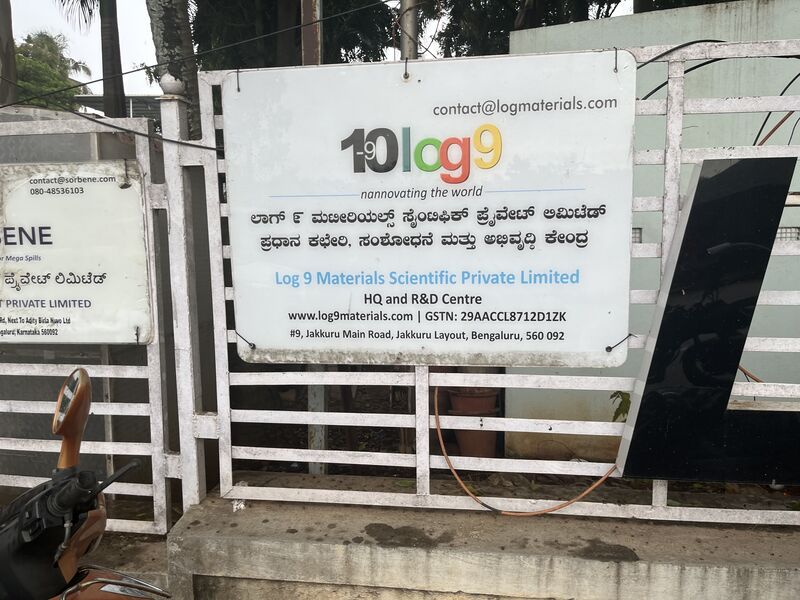
Log9 & Ionique
India’s technology gems
GO Mobility platform for green aviation
For the last few months, the Drone & Aviation Taskforce of the IIT Alumni Council has visited over one hudred companies from Salem and Coimbatore to Hosur and Pune with Bangalore and Nagpur inbetween . The journey took us to some amazing companies and got us to meet some outstanding entrepreneurs.
The Council has finally shortlisted partners for aviation batteries, electric drivetrain, fuselage, interiors, test runways and technology. We had the opportunity of meeting CSIR NAL, HAL, IIT Bombay, IIT Chennai, IIT Kanpur, IISc, the Jawaharlal Nehru Institute of Advanced Studies and the Pilot training Academy in Amethi. Along the route, we also exchanged notes with the Task Forces on Solar (silicon), Perpetual Power (nuclear) and Shipbuilding.
The Council has shortlisted the flying club and MRO runways at Hebbal in Bangalore, Hosur, Juhu in Mumbai and Gaziabad in NCR as the final locations for testing and assembly.
The first aircraft would be an air ambulance capable of flying at 350 kph at a height of 10,000 feet under FAS 23 regulations. It would need a 600m runway for takeoff and have an endurance of 90 minutes. It will use a Lithium Titanium battery by Log9 and a serial hybrid drive train by Ionique. Both the drive train and battery would be built in India and are based on 100% indigenous technology. The planes will be fully autonomous and can be reconfigured for use as cargo drones. Test flights are expected in early 2026 in rural Africa.
Log9 founded by Akshay Singhal, a BTech and PhD from the Roorkee campus of IIT stands out as one of India’s greatest success stories in the area of battery technology. It started off developing Aluminium graphene batteries for Nuclear Submarines of the Indian Navy and then developed batteries for the Vande Bharat trains of the Indian Railways.
In 2023, Log9 made the disastrous strategic mistake of trying to compete with subsidised and unsafe Chinese consumer batteries for applications like electric road vehicles like buses and cargo vans. This led to a Rs 250 crore cash loss. Log9 with a 250 MWH battery unit had no chance of competing with Chinese companies doing 100 GWH of production.
To make things worse, Indian OEMs like Tata Motors and JBM started importing these highly unsafe poor quality shabby cells to make cheaper battery packs. The end result has been over 150 fires in electric buses and thousands in smaller vehicles. Most have failed in upper Himalayas as the batteries do not work in sub zero temperatures. 100% of the fires have been in batteries based on LFP and NMC chemistries.
On the other hand the Log9 batteries and Ionique systems use a superior chemistry which can operate at sub zero temperatures and has not had a single case of fire.
All the Go Mobility projects will now use LTO Batteries in conjunction with Ionique drive trains for all bus, boat and plane deployments globally.