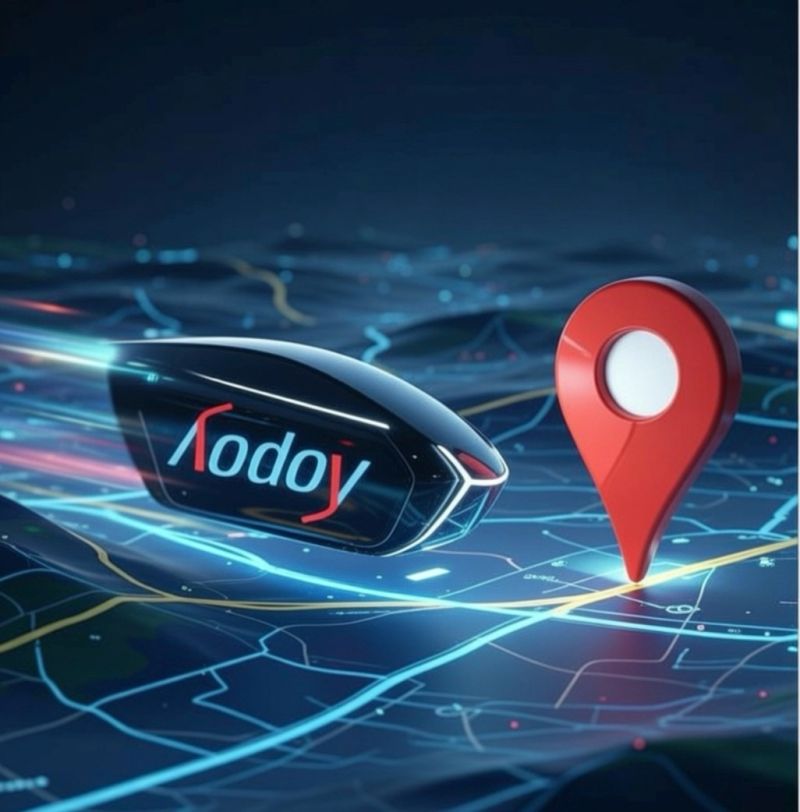
Transport ai is set to redefine transport.
Both for navigation and routing.
Google maps is just not good enough
Google Maps is incredible—real-time traffic from billions of users, Street View immersion, and now Gemini-powered conversational guidance. But in 2026, AI-native systems have the potential to go far beyond. And contrary to global misconceptions, Indian ai startups seem to have harnessed the power of the geospatial and satellite ecosystems to gallop ahead of everyone else. Leading the charge are three Indian startups – Genesys, MapMyIndia and Kodoy. Kodoy is the latest entrant – a ai native. MapMyIndia counted Vijay Mallya among its angel investors and Genesys did the actual survey work for Google earth and Apple Maps. All three have an ai element and all go live in FY 2026-27.
Here’s how next-generation AI navigation could genuinely outperform Google maps:
1. Hyper-personalized, predictive routing
Learning your exact driving style, vehicle efficiency, health preferences (e.g., low-stress paths), or even calendar context to suggest proactive detours—like a quick EV charge when your battery dips low. But more important, it could use dynamic routing to provide uber type door to door functionality to public transport vehicles.
2. Ultra-granular, hyper-local intelligence
Integrating live IoT, drone/satellite feeds, and edge-AI for pinpoint accuracy in urban chaos, rural gaps, or dynamic events where crowd-sourced data alone falls short. The key function here is to be able to work with the local administration to plan for known events like a trade fair or Republic Day parade and reroute. Or to show details in 3d. This would permit spatial awareness for air taxis and prevent cars from getting confused at a fly over or tunnel/
3. Privacy-first architecture. On-device neuromorphic computing and federated learning deliver accurate routes without constant data harvesting—vital in an era of growing privacy concerns.
4. Immersive, human-like contextual awareness Using advanced digital twins (down to near-molecular fidelity) to create living simulations of roads, scenes, and environments. Imagine navigation that “sees” and adapts like a cinematographer framing the perfect shot—precise, adaptive, and alive.
5. Specialized excellence in niches. Superior off-road/eco-routing, AR overlays via wearables, accessibility features (wheelchair-precise paths), or seamless autonomous vehicle handoff.
Startups like Kodoy are inspired by this vision. Their core tech builds digital replicas of humans and environments with extraordinary detail—framed like a photographer composing a scene (hence their logo’s iconic hand gesture)
Applied to navigation, it could enable flawless predictive modeling, molecular-level scene understanding, and truly personalized guidance that feels intuitive and alive.
Google Maps set the standard. The next leap? AI that doesn’t just map the world—it anticipates, personalizes, and protects it